
Sustainable private cloud: how to balance energy, performance and business impact
In this keynote, discover why an energy-efficient cloud is not automatically a sustainable cloud. Wout (CTO) and Matthijs (Lead Sustainability) show how every layer of your infrastructure affects your footprint: energy source, datacenter, hardware and software stack. Learn how to measure what truly matters and align your business goals, engineering constraints and sustainability targets.
Look beyond the energy meter
Energy use per server is only part of the picture. Your energy source, datacenter cooling, hardware lifecycle and software stack all affect your footprint. An energy-efficient cloud in an inefficient datacenter is still inefficient. This keynote shows you how to assess every layer of your private cloud.
Balance energy savings and performance
Why not put every server in power save mode? Because less power often means higher latency, and for storage or networking that can directly affect your services. Learn how to weigh energy efficiency against performance, so every choice still supports your business goals.
Create one language for sustainable decisions
Executives, engineers, finance and sustainability teams each define efficiency differently. Discover how a shared metric like energy consumption, measured on a granular level, aligns your teams and enable you to test what truly makes your cloud more sustainable.
A greener cloud starts with understanding the full picture
Energy efficiency is often seen as the shortcut to a sustainable cloud. Use less energy and your cloud is greener, or so it seems. In reality, sustainability is far more complex. Every private cloud relies on a chain of energy sources, datacenters, hardware and software, and each layer has its own efficiency. The strategic question is not whether your cloud uses energy. The question is: how is that energy used, what value does it create and which trade-offs are you willing to make?
Learn how to make your private cloud more sustainable without compromising on performance or business impact.
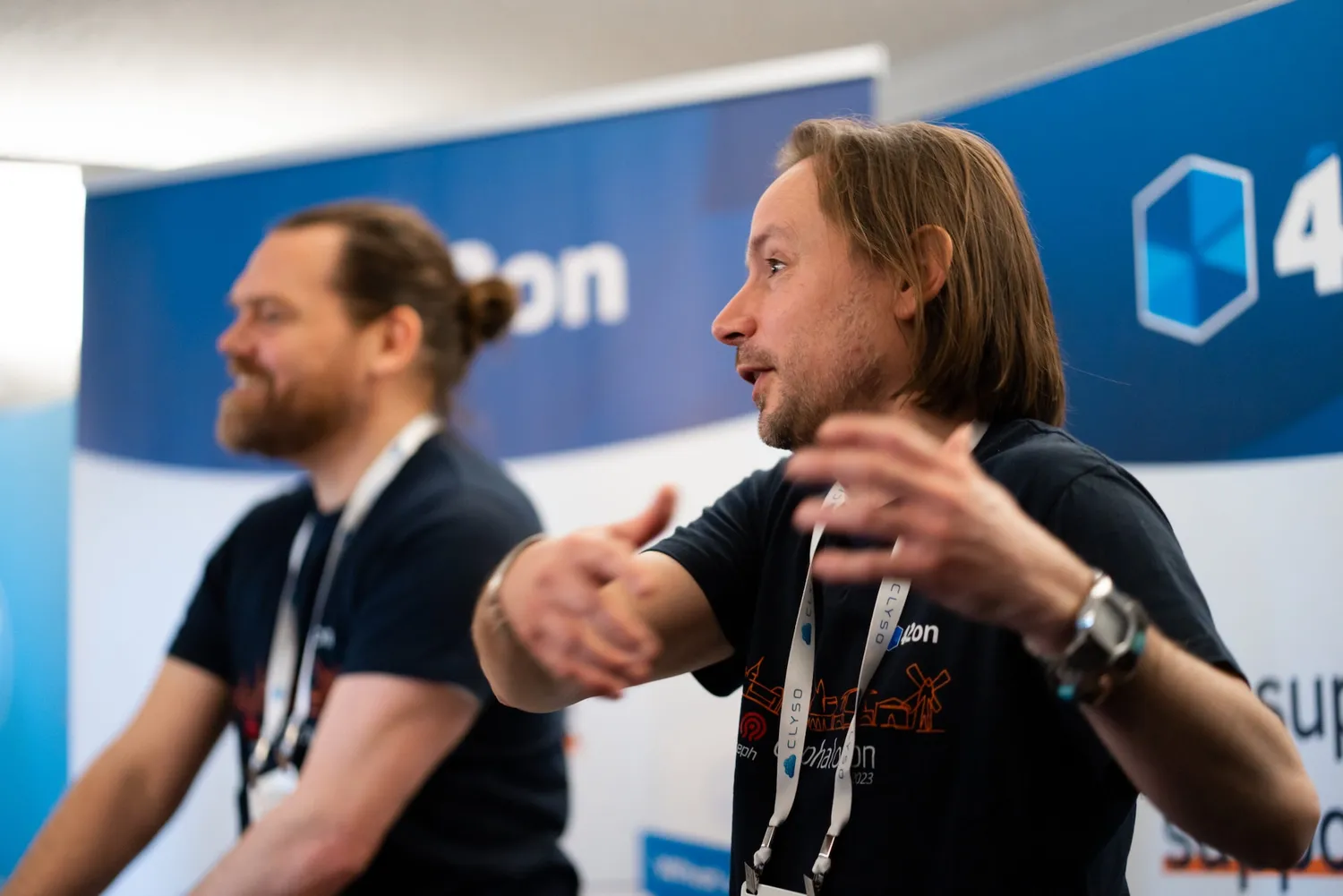
Make conscious choices about energy, performance and impact
Saving energy sounds like an easy win, but energy efficiency gains can come with trade-offs. What looks efficient from an energy perspective can create latency for your engineers or limit what your business can achieve. A sustainable private cloud starts with understanding those trade-offs and making choices that align with your overall goals.
In this keynote, you will learn how to:
- Understand why an energy-efficient cloud is not automatically a sustainable cloud
- Assess the efficiency of every layer, from your energy source and datacenter to your hardware and software stack
- Weigh energy savings against performance, for example when using power-saving mode
- Align executives, engineers, finance and sustainability teams around one shared metric
- Measure energy consumption on a granular level to test what truly makes your cloud greener
How we help
Insight into your full footprint
We look beyond the energy meter. From your energy source and datacenter to your hardware and software stack, we help you understand where your private cloud uses energy and where improvement is possible.
Granular measurement
Every server offers countless measurement points. We help you collect the right metrics on a granular level, so your sustainability decisions are based on data, not assumptions.
Balanced technical choices
Not every energy-saving setting is suitable for your environment. We help you weigh energy efficiency against performance and latency, so every change still supports your business goals.
OpenStack, Ceph and Kubernetes expertise
From compute and storage to container orchestration, we help you design, build and manage open source infrastructure that is efficient, scalable and future-proof.
Operational excellence
We provide 24/7 support and monitoring through our Managed Services, ensuring your private cloud performs reliably while we help you make it more sustainable over time.
Knowledge sharing and alignment
Sustainability requires a shared language. We help executives, engineers, finance and sustainability teams align around one common metric and move forward together.
Register now and discover how to make your private cloud more sustainable

Presented by industry experts
Wout van Heeswijk, CTO at Fairbanks
Wout is a technical expert in open source infrastructure with extensive experience in OpenStack, Kubernetes and Ceph. He helps organizations get the most value from their open source clouds. In this keynote, he explains what energy-saving choices mean for performance and why every efficiency gain comes with a trade-off.
Matthijs Harmsen, Lead Sustainability at Fairbanks
Matthijs focuses on making IT more sustainable, from Fairbanks’ own footprint to the cloud environments it manages for customers. With a non-technical background, he bridges the gap between sustainability goals and engineering reality. In this keynote, he explains why sustainability in the cloud is more complex than simply saving energy.
More about Fairbanks

Fairbanks supports organizations that want to build and manage their own cloud environments, on their own terms. As specialists in open source infrastructure, we believe that digital sovereignty and sustainability go hand in hand.
With our deep technical expertise and a strong European foundation, we help IT teams take control over their infrastructure and its impact. From OpenStack to Kubernetes, from design to daily operations, we work side by side with your team to build private clouds that perform well and use energy responsibly.
We don’t just implement. We co-create, enable and support. Always with transparency, flexibility and independence at our core.